Self Care Project is a brick and motor mental health services provider looking to develop a digital product to enhance the well-being of digital generations who may face barriers in accessing services offered in existing mental health frameworks.
How can we make mental health care accessible and fun for the digital generations?
The goal of this particular project was to conceptualize a digital product that pivots from the existing barriers of traditional mental health frameworks and reimagine self care and taking good care of one’s mental health in the digital landscape, and make it fun too.
Why must therapy and mental health services be so sterile? It’s not doing us any good, people really need the help, and honestly, It’s already 2025, there must be better solutions… – user during interview
Research :
To better understand how to create a digital product that can make mental health services more accessible and less oppressive, we conducted :
User research
Interviews with mental health professionals
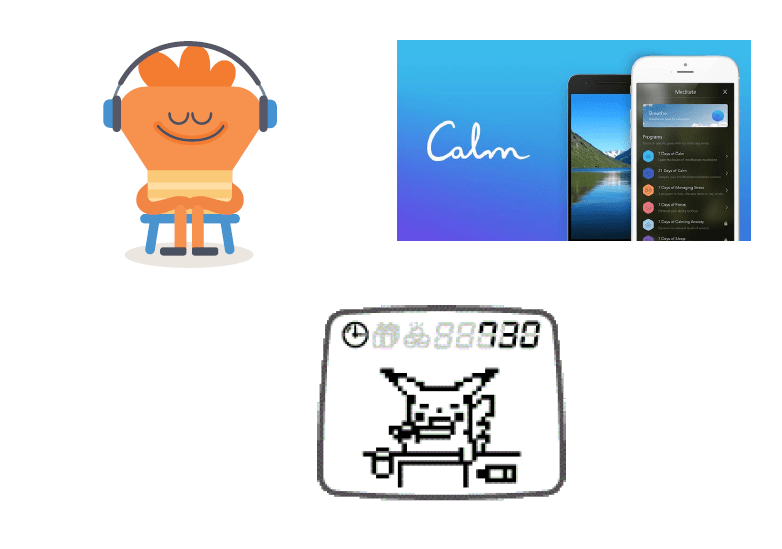
Product research of : existing mental health, mood and self care products
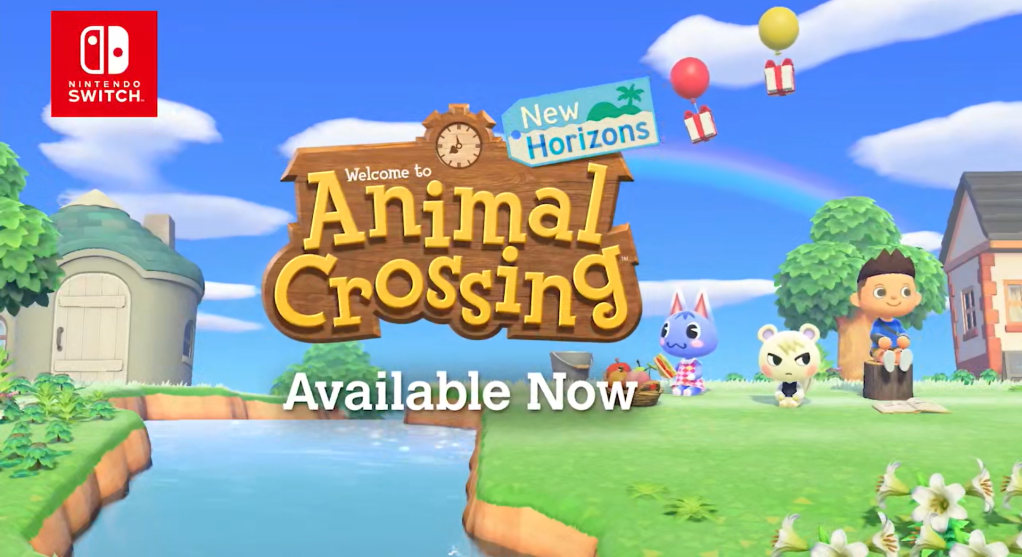
Product investigation : products beyond digital apps that featuring a care and daily routine component that target users report having a strong emotional connection to and find fun to use – nostalgic pocket games with a strong care and daily routine component, such as Pocket Pikachu, Tamagotchi and Animal Crossing
Through these inquires, we identified:
01 Target Audience Traits :
targeting Gen Z & Millennials with neurodiversity
difficulty in building routines practicing daily selfcare tasks
need tools for with communicating personal mood and needs
most are tech savvy and find interest in accessing virtual mental health care such as Headspace and online therapy such as Better Help
Expressed mental health improvement in “chill” games such as Animal Crossing
A strong emotional attachment towards virtual pets and characters
“During the pandemic, having Animal Crossing saved my mental health from crashing… I know it’s just a game but having that companionship of animal villagers and daily things to do gave me a sense of purpose and joy.”
– user during interview
Toronto tamagochi club as demographic research for conceptualizing the mental health app
02 Pain Points
Certain mental health apps and mental health care can feel too clinical, cold and oppressive
Users often feel invalidated and not have their personal voice and identities included in their care experience = looking for warmth and self-representation in digital experience
Users attention span in digital age = short
Cognitive load – complexity and information load of current apps make it hard to use when users are already not having a good day
03 Goals
Mobile product
Fun, engaging, friendly to use product
Users can feel represented and valued as an individual – showcases individuality
Increased emotional self –regulation and communication in users
Product with companionship component that builds a safe environment
Pocket sized product that is not clinical or academic
Bridge users’ health needs and conditions to users’ real life support circles
Ideation and Design
Initial process :
Key features to include in app:
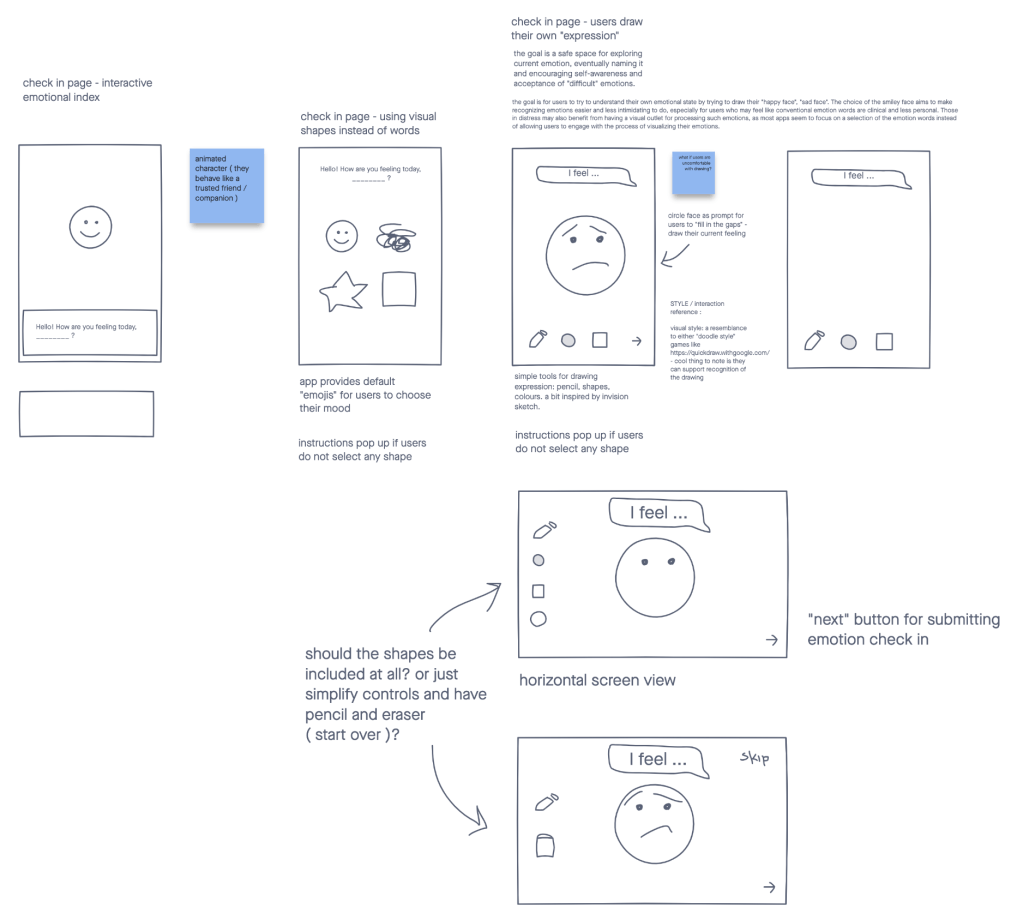
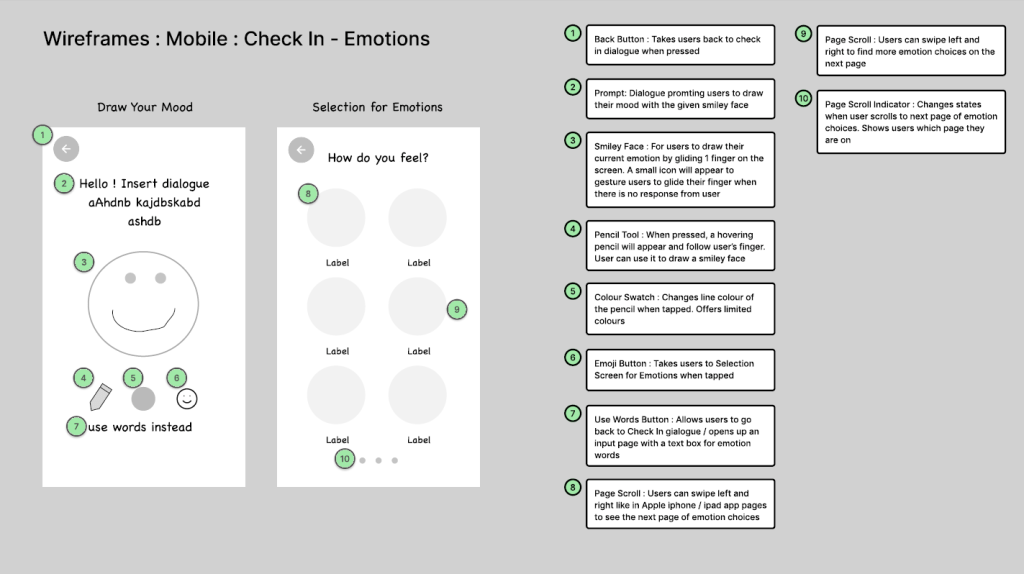
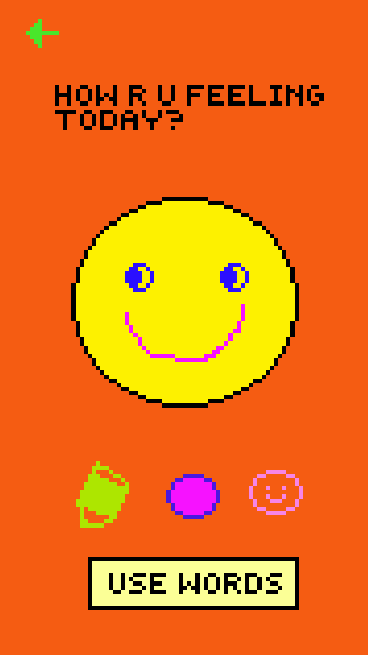
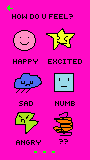
Mood Doodler – Draw your mood
Recognizing one’s own mood is a foundational pillar of both emotional intelligence and self-awareness. This aims to help users to build awareness into their daily moods and emotional states so they can better identify and regulate their emotions and behaviors. We tried different ideas and decided on a “draw your mood” feature where users can draw their “happy face” instead of traditional “ indicate your mood on a scale from 1-10”.
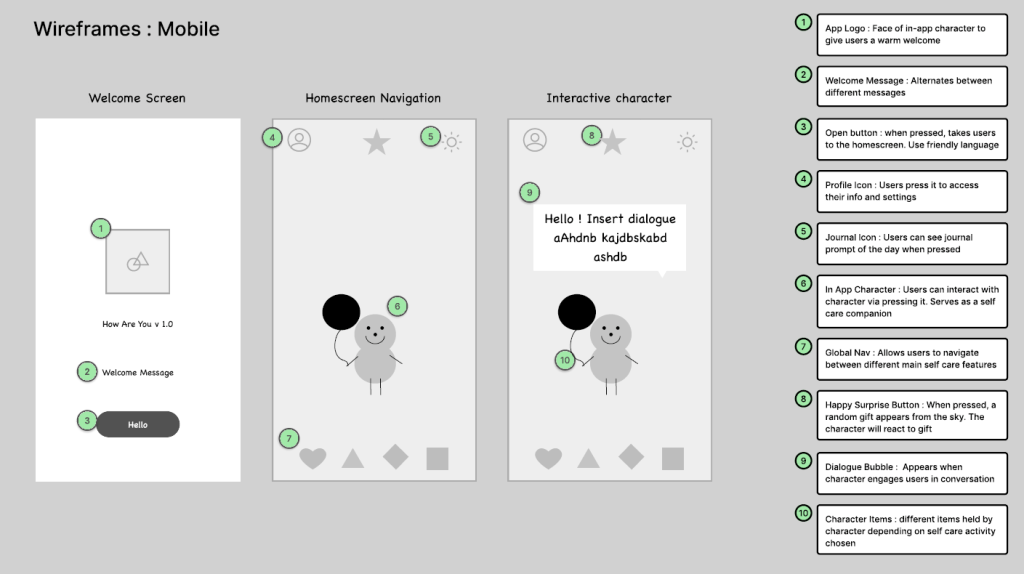
Digital pet / Avatar Friend
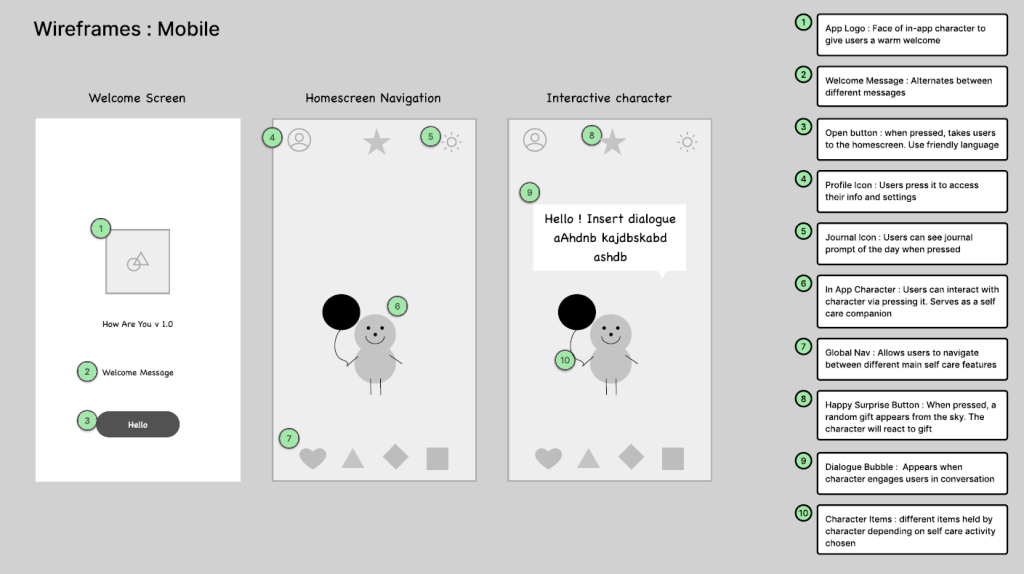
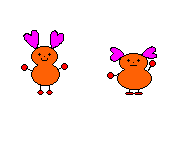
A customizable and interactive digital avatar “pet” that users can care for, with its purpose being to accompany users as they use digital app. The character evolves and grows as motivation for users to keep using the app. This feature aims to create a sense of familiar comfort through nostalgia and add a playfulness and emotional support.
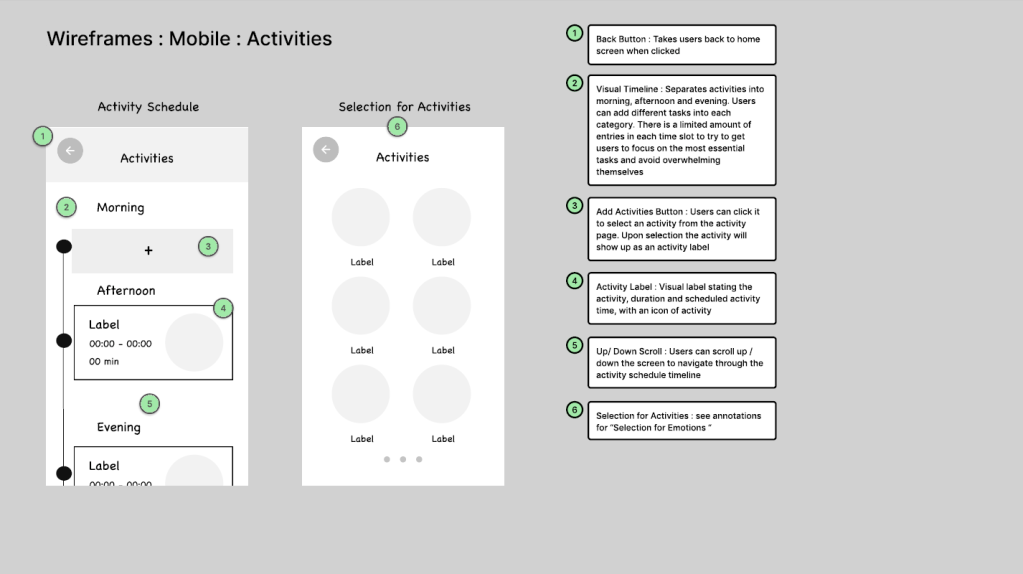
Activity Schedule
To assist users in learning to maintain a self-care and daily tasks routine, we created an Activity Schedule feature where users can create a list of core activities they would like to add to their daily schedule. Users can customize the activities that they find to be most important and be able to add and drop the activities into a visually simple, scrollable time schedule that outlines the time, duration for each activity. Users can also add a timer for reminders of activities.
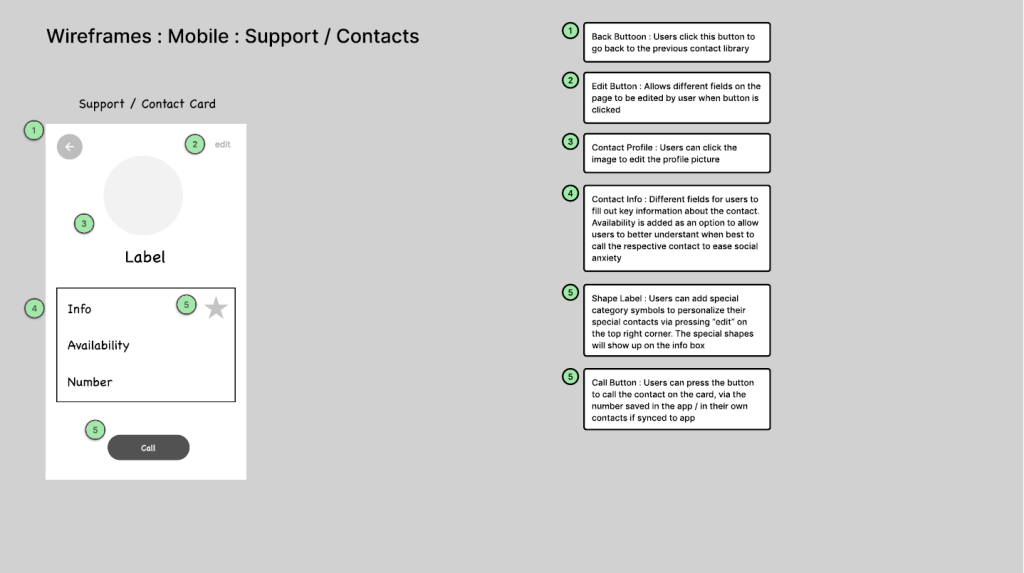
Support / Contact Book
A “phone book” or “quick contact list” of trusted people users’ can contact when they need support. Users can build their own phone books with contact information from their trusted support people. It also includes a feature to import directly from existing phone contacts if needed. It’s design is focused on visual ease and clear categorization of user’s different levels of supports, aiming to make asking for help easier and clearer.
User Profile
For users to customize, and features a mini directory of different features of the app. Users can access their contacts, journal records, and a progress log that encourages users to maintain self care habits on the app
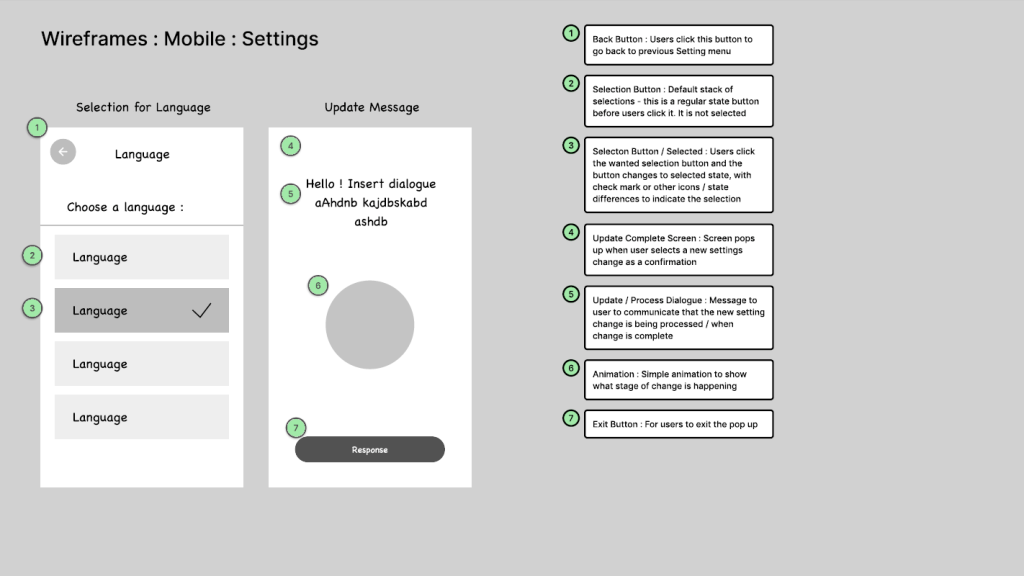
Languages
Allows users to select their most familiar language when using the app. This is important as when users are in stress, being able to access care in their native language ( something users reported to be lacking in the traditional mental health spaces ) would greatly reduce stress and mental load and create more safety through familiarity.
Stickers
A built in reward system where users can browse through their “sticker awards” that they can get when finishing specific goals within the app. (e.g. completed their profile, created their own contact list, followed self care task for a consecutive amount of days )
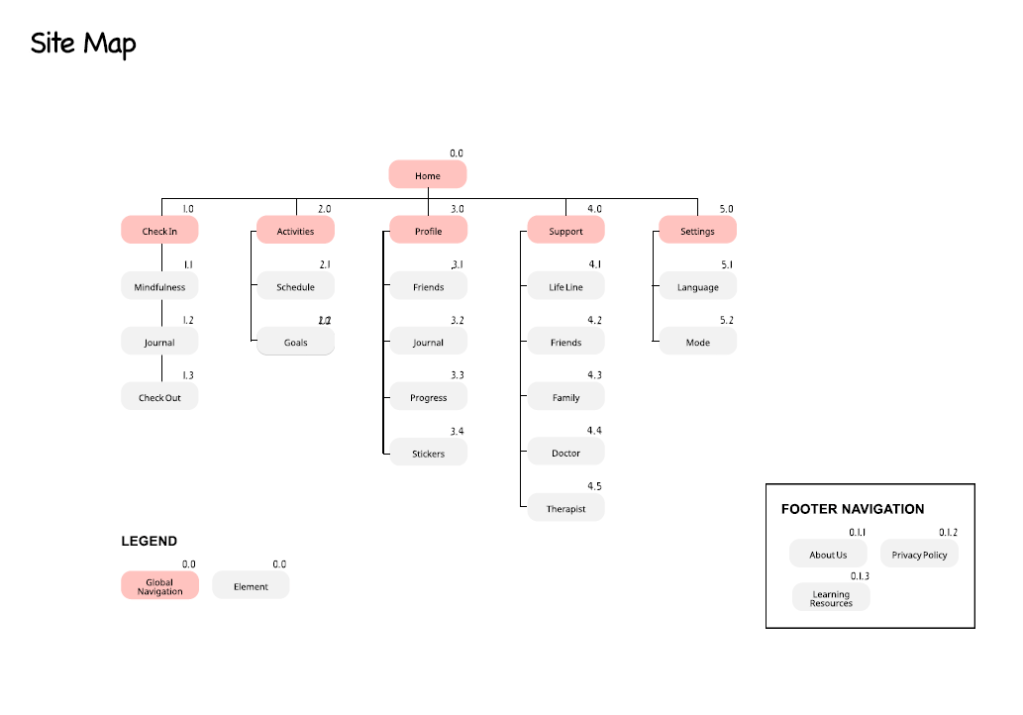
Site map :
Initial Wire Frames : for the ” draw your mood ” feature
Prototyping Screens :
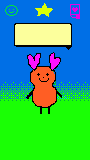
stylistic experiments : pixel style with high saturation :
SHOW PICS
Branding / UI considerations:
not to do : clinical, medical
consider : personable, video game UI, soft, warm, cohesive yet customizable to accommodate different individuals
Results
( even if you don’t have any metrics to show, that’s ok)
How did your design solutions impact the business? Write any success metrics that relate to your problem statement. Even if your designs didn’t ship, it’s important to mention hypothetical success metrics you’d pay attention to because it shows that you understand the importance of driving impact and outcomes.


 Krys Ch